

APPLIED ARTIFICIAL INTELLIGENCE
IN AFRICA

Applying geospatial foundation models to African challenges

To unlock the transformative potential of Artificial Intelligence in Africa, the continent must transition from being a passive consumer of imported technology to a sovereign creator of localized solutions. True socio-economic impact requires a Dual-Engine Approach: a strategy that simultaneously develops context-aware AI models and the human capacity to build, deploy and govern them.
The programme is delivered by Trillium Technologies Ltd, anchored by the University of Leeds, and supported by the partner network SANSA, SARAO, DARA, NITheCS, the University of Cape Town, Stellenbosch University, ESA Φ-lab, IBM, Intel, Google Cloud and NVIDIA.
FDL Africa operationalises that philosophy through a repeatable, iterative 3 stage lifecycle. By moving systematically from hyper-local proofs of concept in stage 1 to an immersive sprint training stage and finally to a scaling stage, this framework ensures that AI development in Africa is locally led, economically sustainable, and continually advancing toward higher degrees of maturity.
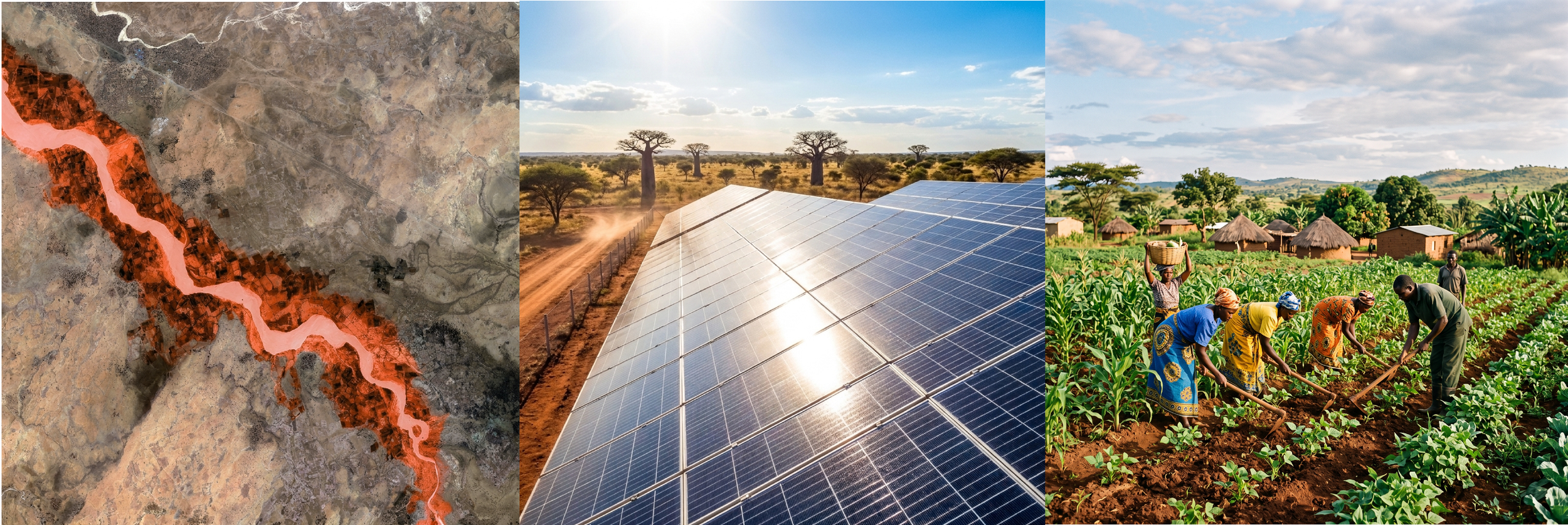
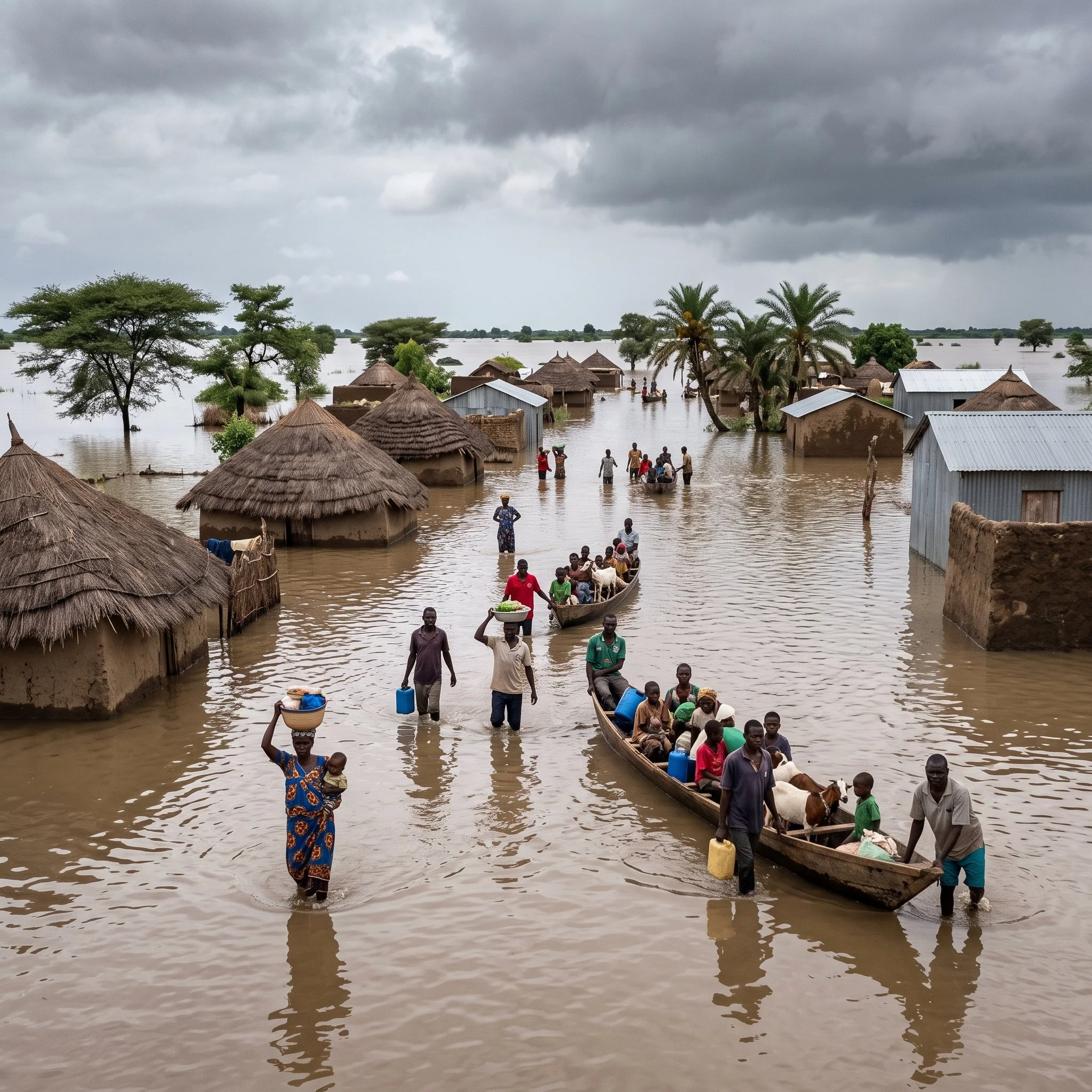
FDL Africa is a structured research sprint applying state-of-the-art geospatial foundation models to three challenges defined by the African research community building on the FDL Africa Big Think staged in March 2026.
Twelve early-career data scientists, working in three teams of four alongside subject-matter experts and faculty leads, will progress through a calibrated three-stage curriculum — from first contact with a foundation model to a validated prototype pipeline — across the period of sprint delivery between January and March 2027.
Projects

FDL Africa Programme Schedule
FAQ
What sort of applicants are we looking for?
Each FDL team is composed of four team members (supported by one or more faculty members), creating a breadth of interdisciplinary skills. The ideal is to have an experienced data scientist (who is comfortable with all of the tools and machine learning approaches) and a subject matter specialist (who knows the problem well and the kind of data that might be useful). The third and fourth team members can be all-rounders - ideally with strong Python and data science skills, who might have worked on similar problems in the past and can bring fresh ideas and approaches and support the scientific goals.
What are the dates of the FDL research sprint?
The FDL research sprint is expected to take place from mid-January or mid-March. FDL Africa will be an 8-week full-time paid effort. Your full-time commitment is expected throughout the duration of the research cycle.
Where does the research cycle take place?
FDL Africa will kick off with a 5 day, in person boot camp in Cape Town, South Africa. The following 7 weeks will be virtual with standard core work hours, daily stand up meetings and other programmed elements. We aim to finalize the details in the upcoming weeks and will keep applicants updated on the latest developments.
Do I need to put my own research on hold or be seconded from my current role?
During the research sprint, teams work intensively on their projects and are expected to be present and active for the full duration. There may also be additional social activities so be prepared to be kept busy. However, we hope that the work you do during FDL Africa will complement your research and role - either by providing a deep-dive introduction to emerging AI techniques to take back to your own investigations, or providing an opportunity to work shoulder-to-shoulder with world-class experts from space agencies and private sector partners.
Each year the researchers comment on the value of getting a fresh perspective and the strong relationships and friendships that are made.
I’m not sure if I meet all the criteria, should I still apply?
We are looking for a diverse group of individuals, so we strongly encourage you to apply even if you’re not sure that you meet our criteria. Teamwork skills are just as important as anything else. That said, we expect to have many more applicants than available places, so we will prioritize applicants with direct knowledge of African data sets and/or applications of geo data and/or using Foundation models or AI for Africa.
Do I have to pay to attend FDL Africa?
No. Researchers receive a stipend for the duration of the research as well as complimentary accommodation for any in-person portion of the research.
Is FDL Africa a full time commitment?
Yes. FDL is a full time commitment and beyond. We know that teams need to work hard over the eight weeks to get the great results we have seen in previous FDL cycles. We hope that in return, FDL provides a unique opportunity to work with globally recognized leaders in the field and produce career-enhancing work into the future.
Is FDL Africa an accompanied program?
No. Accommodation is provided for researchers during the one week in-person sprint (if deemed in-person), but we have no additional accommodation available for friends and family during in-person portions of the research.