


FDL recruitment timeline
FDL Horizons: A deep dive into FDL 2026
Our 2026 information sessions was held February 2026. In case you missed it, we recorded it for you. You can contact recruitment@trillium.tech with any questions you may have about the process.
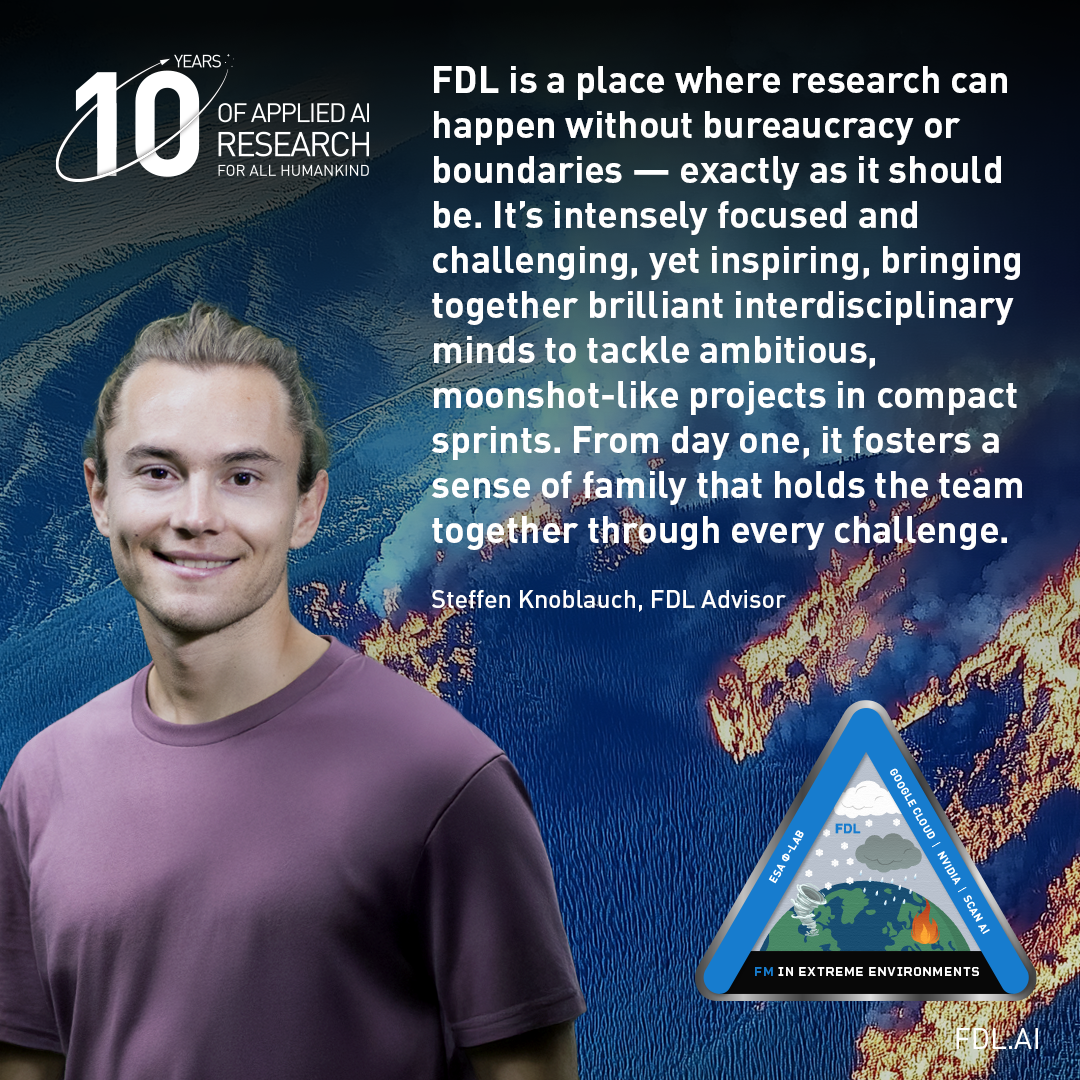
WHY fdl?
a primer for professors and supervisors

WHY APPLY?
Be part of the team
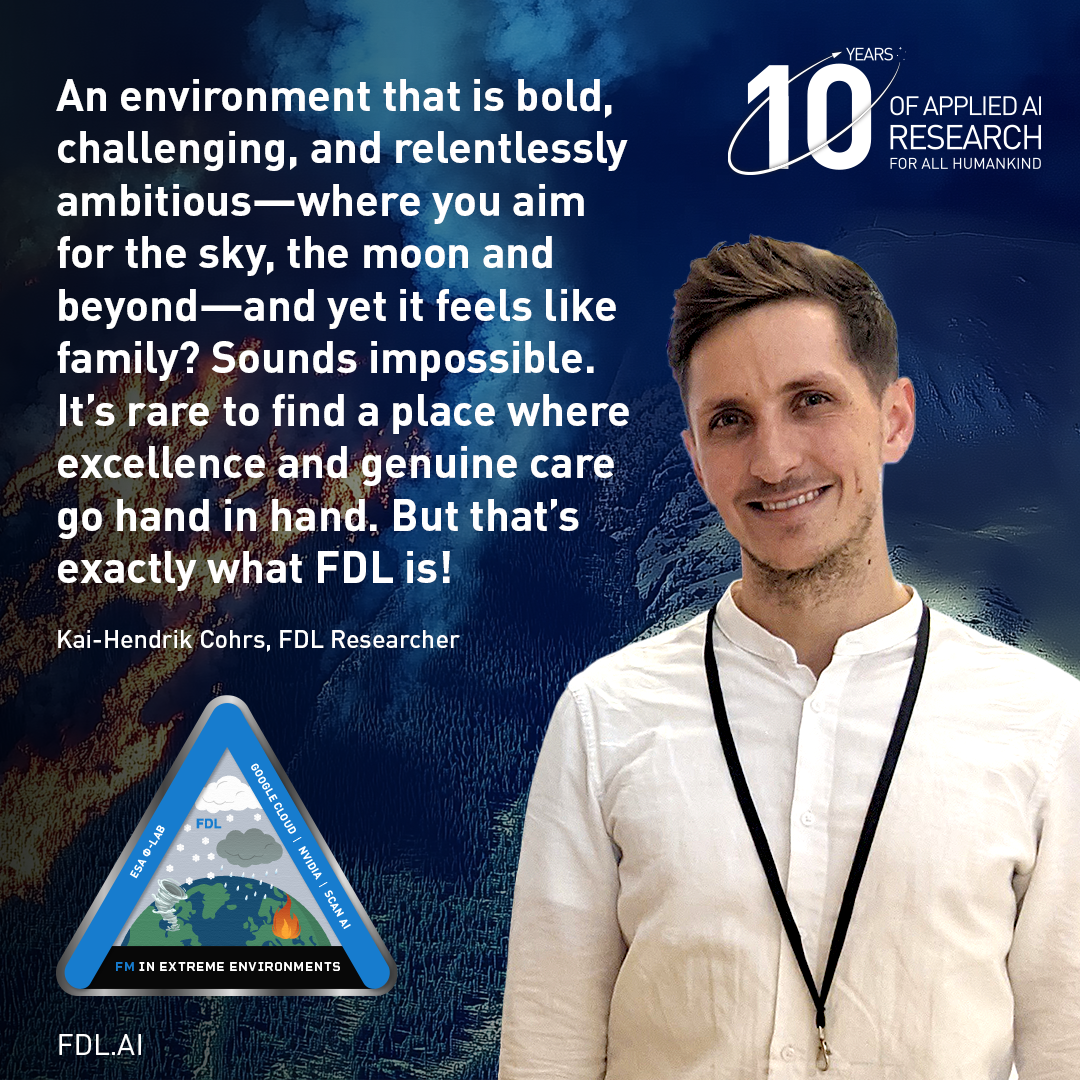
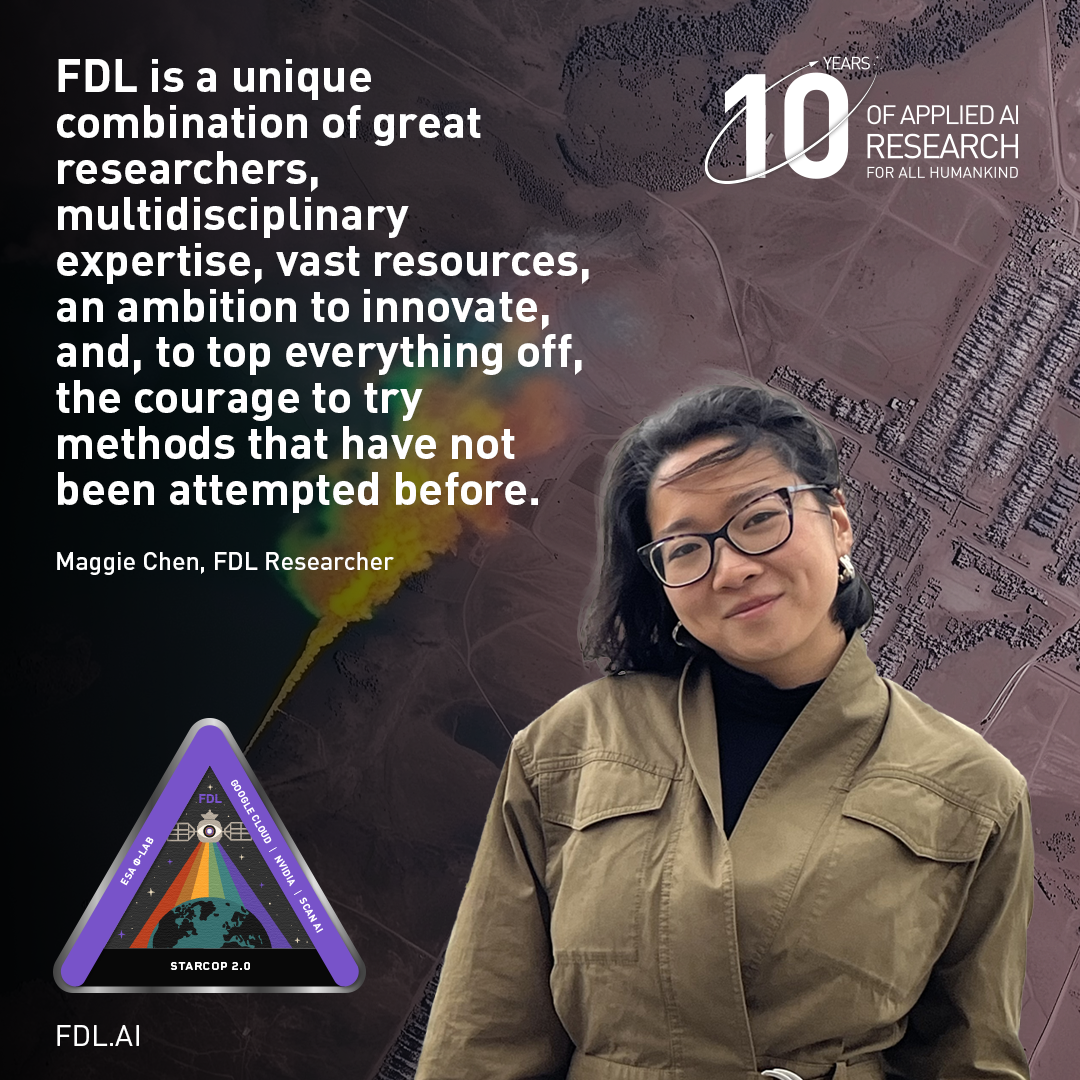
Interdisciplinary teamwork is at the heart of the FDL philosophy, and our experience has shown that a mix of skill sets creates results far greater than the sum of their individual parts. Working closely during the eight-week research sprints, teams achieve outputs that might otherwise take years.
Our growing international network provides great value for its members, many of whom have continued work on projects they began at FDL.
Researchers have also gone on to join some of the world’s most prestigious technology, Earth Observation companies and academic institutions in a variety of roles. FDL projects have been featured in peer-reviewed journals, conference presentations, posters and numerous news features.
Build best practiceS
Best practices in artificial intelligence are still emerging, and FDL is at the forefront of developing effective workflows for AI development in the space sector. Our team-focused approach enables an expertise chain that can tackle problem definition, data source aggregation, workflow composition, algorithm development, creation of inference models and deployment in an efficient manner. We are conscious that teaching machines to learn is different from traditional software development and this requires a new approach.
UNLOCK Powerful partnership opportunities
FDL.AI has developed strong relationships with world-class AI researchers and leaders in technology. Their support helps us overcome hurdles using solutions that would usually be beyond the easy reach of researchers, such as state-of-the-art hardware to facilitate rapid iteration and a wealth of experience and expertise in building robust AI workflows.
Help humanity
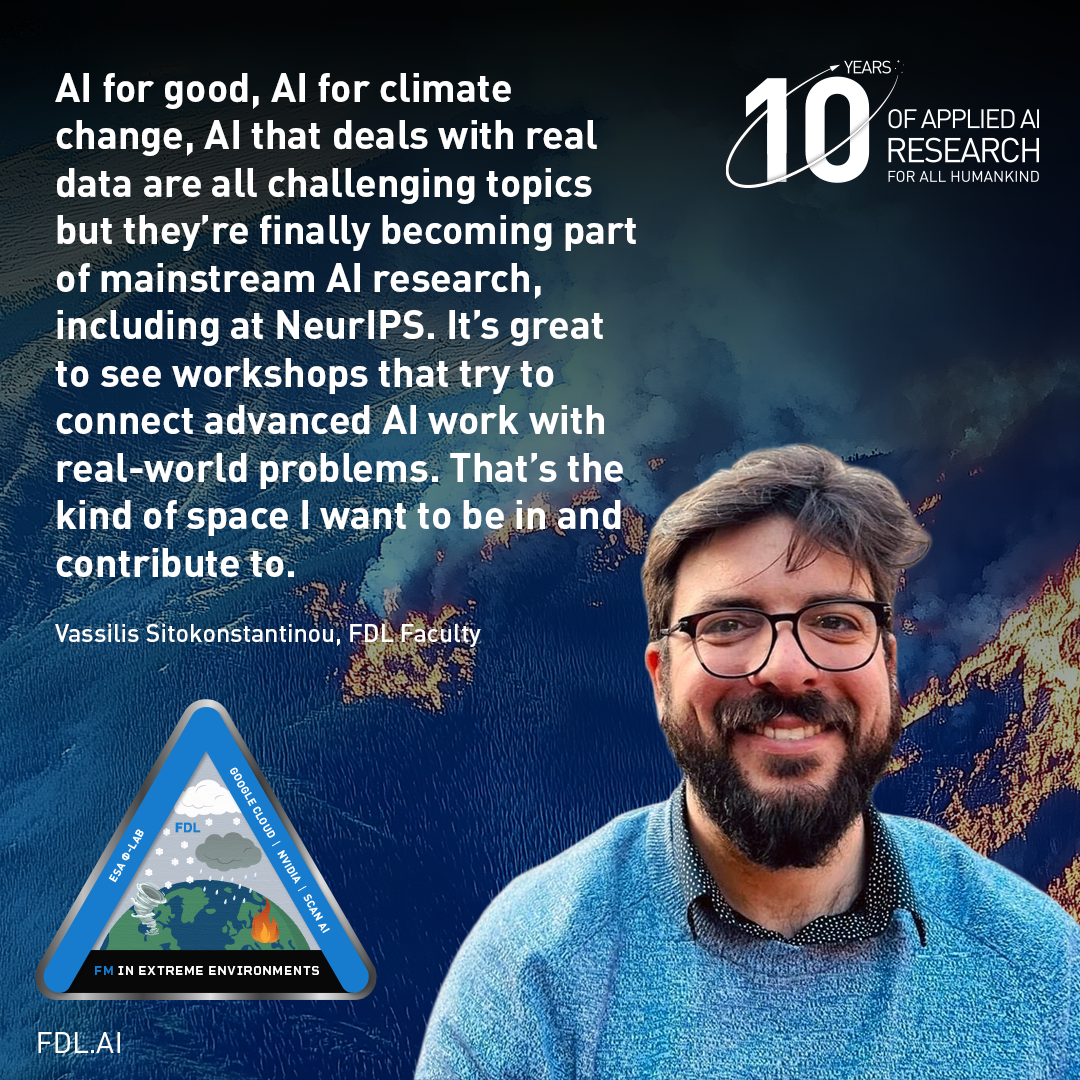
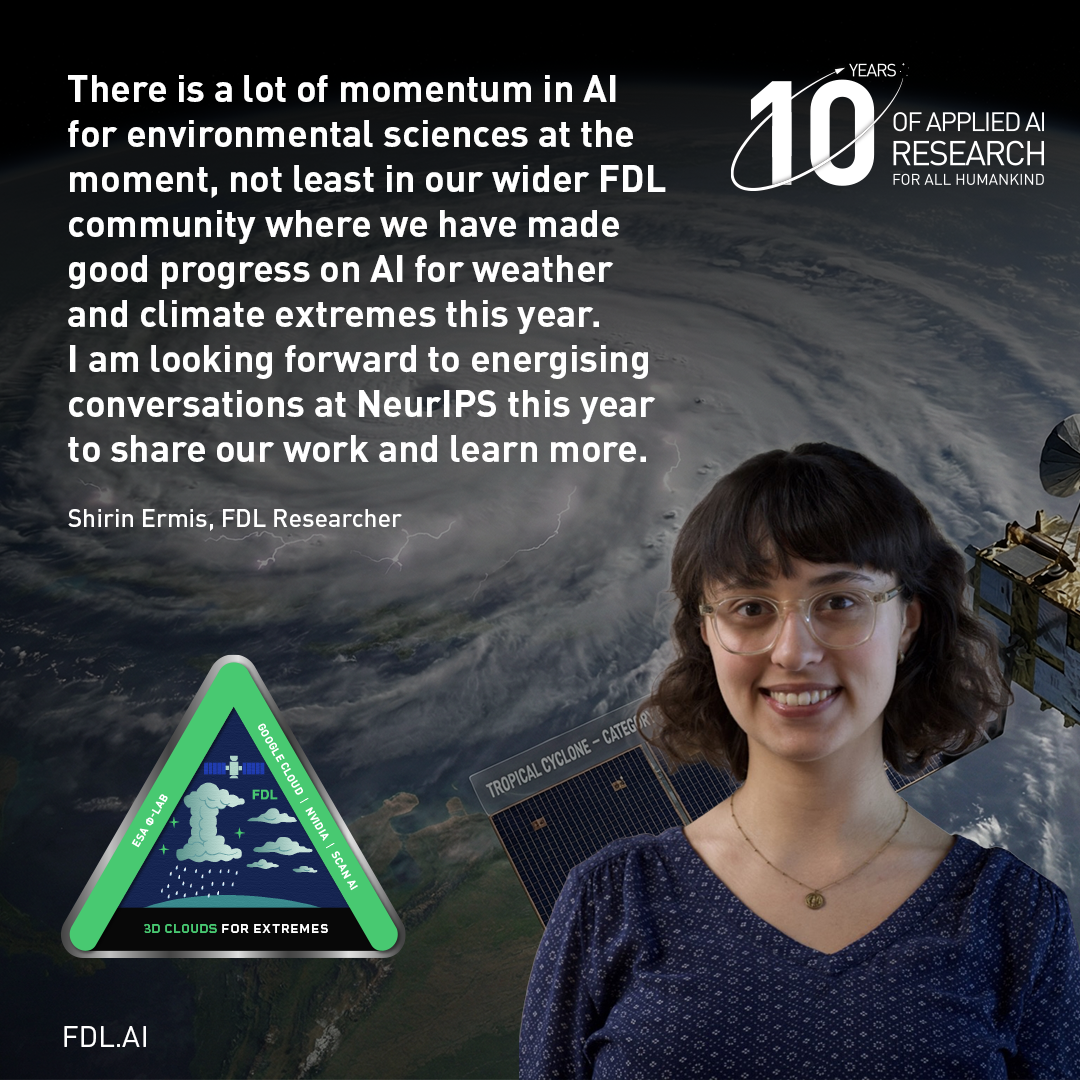
FDL brings brilliant minds to big questions - such as ‘can we democratize ML for faster, more effective preparation for and response to natural disasters and extreme weather events?’ - and gives researchers a chance to develop solutions with the potential to advance science, inform debate and save lives. From asteroid characterization to early-warning systems for natural disasters, there is huge potential to make a difference with FDL.
FAQ
What sort of applicants are we looking for?
The participants of FDL are PhD or Postdoc level researchers in AI, data science, space sciences or software engineers. Successful candidates are matched to form small (three-person) multi-disciplinary, complementary teams for the research sprints. FDL carefully curates teams from all the researchers that make it through to the final selection pool balancing deep subject expertise, technical capacity and knowledge and abilities to work across disciplines.
Can I apply as both an AI/data science, space science researcher and software engineer?
Over time, we have seen a shift as more applicants bring both ML and space science experience to the table. These applicants do tend to lean in one direction, however, when it comes to specialty, we ask all applicants to align themselves with one of four categories:
ML/AI/ Data Scientist
Hybrid - Specialty ML Lead
Energy / Space (Domain) Science Scientist
Hybrid - Specialty Energy / Space (Domain) Scientist Lead
Your choice will not affect your application positively or negatively. A frank self-assessment of your skills is important. We select for potential and curiosity as well as skill set, and if there is a lack of domain experts, researchers with experience in related fields or technologies will be considered.
WHAT ARE THE DATES OF THE FDL RESEARCH SPRINT?
The FDL research sprint is expected to take place from mid-June to mid-August. This will be followed by a publication phase to allow teams to focus on polishing results by continuing to review and improve on their work. A showcase will take place towards the end of October and researchers will be asked to submit their finalized technical memos to AGU and NeurIPS.
FDL will be an 8-week full-time paid effort and the work will be carried out over three phases. Your full-time commitment is expected throughout the duration of the research cycle and there will be commitment required during the publication phase as well.
Where does the research Cycle take place?
At the moment, the location remains undecided. However, we've successfully conducted sprints in both in-person and hybrid formats. We aim to finalize the details in the upcoming months and will keep all applicants updated on the latest developments.
Can I apply to FDL if I’m a non-US citizen?
FDL is pleased to be able to welcome applications from researchers from around the world.
All applicants who are living in the US should either be US Citizens, have lawful permanent residency (Green card), or have a student visa that allows paid work during the summer period (F1, J1). It is the responsibility of the applicant to verify their visa status allows them to join the FDL research.
We do try to co-locate teams to make working together easier, but this isn't a deciding factor. You will be selected based on your research and expertise, not your location.
Do I need to put my own research on hold?
During the research sprint, teams work intensively on their projects and are expected to be present and active for the full duration. There may also be additional social activities so be prepared to be kept busy. However, we hope that the work you do during FDL will complement your research - either by providing a deep-dive introduction to emerging AI techniques to take back to your own investigations, or providing an opportunity to work shoulder-to-shoulder with world-class experts from space agencies and private sector partners.
Each year the researchers comment on the value of getting a fresh perspective and the strong relationships and friendships that are made.
I’m not sure if I meet all the criteria, should I still apply?
We are looking for a diverse group of individuals, so we strongly encourage you to apply even if you’re not sure that you meet our criteria. Teamwork skills are just as important as anything else. That said, we expect to have many more applicants than available places, so we will prioritize applicants in PhD or postdoctoral programs.
Do I have to pay to attend FDL?
No. Researchers receive a stipend for the duration of the research as well as complimentary accommodations for any in-person portion of the research.
Is FDL a full time commitment?
Yes. FDL is a full time commitment and beyond. We know that teams need to work hard over the eight weeks to get the great results we have seen in previous years. We hope that in return, FDL provides a unique opportunity to work with globally recognized leaders in the field and produce career-enhancing work into the future.
IS FDL AN ACCOMPANIED PROGRAM?
No. Accommodation is provided for researchers during the one week in-person sprint (if deemed in-person), but we have no additional accommodation available for friends and family during in-person portions of the research.